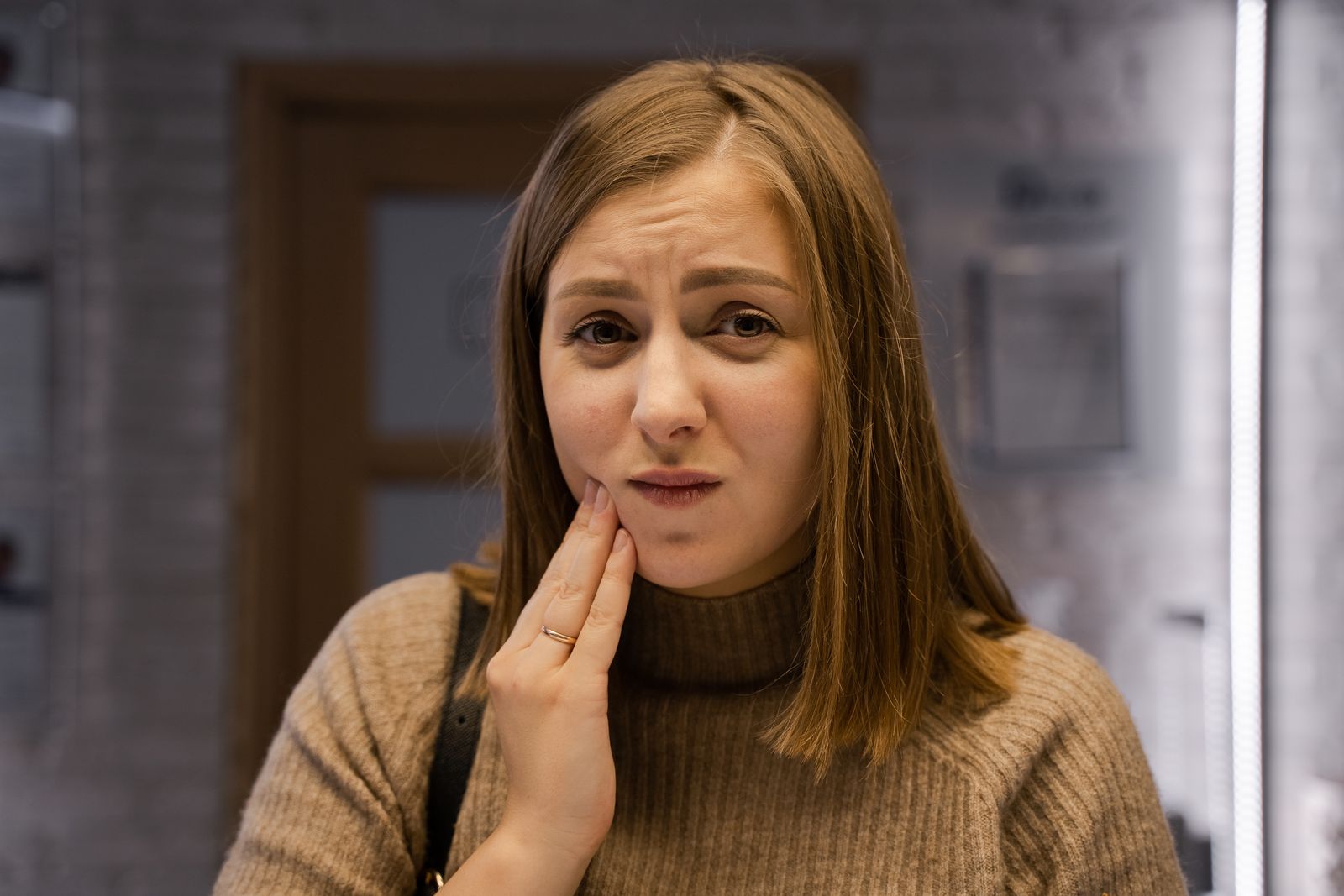
Short answer: Yes, it can.
But not every headache is caused by teeth, and not every toothache necessarily causes a headache. The important thing is to understand under what circumstances these two types of pain are related.
Many people use painkillers for headaches that last for days, thinking they have migraines or attributing them to stress. However, the problem may be an unnoticed tooth decay,gum infection, or jaw-related issue. This is where the concept of 'tooth-related headaches' comes into play.
How does tooth-related headache occur?
The mouth, teeth, jaw, and facial region are extremely dense in terms of nerve networks. The trigeminal nerve, in particular, affects the teeth, face, and a large part of the head. Therefore, a problem with a tooth can cause pain not only in the tooth itself, but also in:
- the temple
- around the eye
- behind the ear
- even in the neck and forehead area.
This is called referred pain. In other words, the source of the pain is the tooth, but it is felt in the head.
Dental problems that can cause headaches
1. Tooth decay and infectionsDeep cavities and infections that have reached the tooth root irritate the nerves. This irritation can sometimes turn into a throbbing headache or a feeling of pressure.Especially:one-sided headachepain that worsens at nightheadache accompanied by sensitivity to hot and coldmay be caused by dental issues.2. Gum diseasesGum infectionsaffect not only oral health but also overall health. Inflamed tissues strain the immune system, and this condition can be accompanied by headaches, fatigue, and even fever.3. Wisdom teethWisdom teeth that are partially impacted or erupt in the wrong position:strain the jaw musclescreate pressure on surrounding tissuescan cause pain that radiates to the head and neckEspecially for many people who say, “I have a headache I can't explain,” the problem is often an undetected wisdom tooth.Does teeth grinding and clenching (bruxism) cause headaches?Absolutely yes.Teeth grinding and clenching is one of the most commonly overlooked causes.Unconsciously clenching your teeth throughout the night:overworks the jaw musclesstrains the jaw jointcauses headaches in the temples and forehead in the morningThese types of headaches usually:start upon waking up in the morningare accompanied by jaw fatiguesubside during the day but recurMost of the time, people cannot understand the cause of their headaches because teeth grinding occurs at night.Migraine or tooth-related headache?These two conditions are often confused.Migraine:is throbbingis accompanied by sensitivity to light and soundmay cause nauseaHowever, there is an interesting fact:During migraine attacks, tooth pain may increase and teeth clenching may be triggered.Thus, migraines and dental problems can sometimes create a mutually reinforcing cycle.Especially temporomandibular joint (TMJ) issues can cause migraine-like headaches. Therefore, individuals who say, “I have migraines, but medications don't work” are strongly advised to undergo a dental and jaw evaluation.The relationship between trigeminal neuralgia and toothacheSome headaches cannot be explained by tooth decay or migraine.In such cases, trigeminal neuralgia comes to mind.Trigeminal neuralgia:suddenlike an electric shockvery severeusually unilateralpresents itself with pain.These pains are sometimes mistaken for toothache, leading to unnecessary root canal treatments. If:the pain persists despite dental treatmentthe pain comes and goes suddenlyit is triggered by touching certain points on the facea neurological evaluation should definitely be considered.How to prevent tooth-related headaches?There are simple but effective steps:Brush your teeth regularly and properlyDon't neglect to use dental flossDon't delay dental check-upsIf you grind your teeth at night, be sure to use a night guardTry to manage stress (stress = teeth grinding = headache)For unexplained headaches, consult not only a neurologist but also a dentistWhen should you see a dentist?If you experience any of the following, there is a high probability that your headache is caused by dental issues:If the headache is on one side onlyIf it worsens while chewingIf it is accompanied by tooth sensitivityIf it is severe in the morningsIf it has persisted for a long timeIn this case, painkillers provide only a temporary solution; the problem will recur unless the underlying cause is identified.Conclusion: does toothache cause headache?Yes, toothache can cause headache.Moreover, this relationship is often much stronger than is commonly realized.In cases of persistent headaches, not only the “head” but also oral and dental health must be evaluated. Because the correct diagnosis can prevent unnecessary medication use and years of pain.
Deep cavities and infections that have reached the tooth root irritate the nerves. This irritation can sometimes turn into a throbbing headache or a feeling of pressure.
Especially:
- one-sided headache
- pain that worsens at night
- headache accompanied by sensitivity to hot and cold
may be caused by dental issues.
2. Gum diseasesGum infectionsaffect not only oral health but also overall health. Inflamed tissues strain the immune system, and this condition can be accompanied by headaches, fatigue, and even fever.3. Wisdom teethWisdom teeth that are partially impacted or erupt in the wrong position:strain the jaw musclescreate pressure on surrounding tissuescan cause pain that radiates to the head and neckEspecially for many people who say, “I have a headache I can't explain,” the problem is often an undetected wisdom tooth.Does teeth grinding and clenching (bruxism) cause headaches?Absolutely yes.Teeth grinding and clenching is one of the most commonly overlooked causes.Unconsciously clenching your teeth throughout the night:overworks the jaw musclesstrains the jaw jointcauses headaches in the temples and forehead in the morningThese types of headaches usually:start upon waking up in the morningare accompanied by jaw fatiguesubside during the day but recurMost of the time, people cannot understand the cause of their headaches because teeth grinding occurs at night.Migraine or tooth-related headache?These two conditions are often confused.Migraine:is throbbingis accompanied by sensitivity to light and soundmay cause nauseaHowever, there is an interesting fact:During migraine attacks, tooth pain may increase and teeth clenching may be triggered.Thus, migraines and dental problems can sometimes create a mutually reinforcing cycle.Especially temporomandibular joint (TMJ) issues can cause migraine-like headaches. Therefore, individuals who say, “I have migraines, but medications don't work” are strongly advised to undergo a dental and jaw evaluation.The relationship between trigeminal neuralgia and toothacheSome headaches cannot be explained by tooth decay or migraine.In such cases, trigeminal neuralgia comes to mind.Trigeminal neuralgia:suddenlike an electric shockvery severeusually unilateralpresents itself with pain.These pains are sometimes mistaken for toothache, leading to unnecessary root canal treatments. If:the pain persists despite dental treatmentthe pain comes and goes suddenlyit is triggered by touching certain points on the facea neurological evaluation should definitely be considered.How to prevent tooth-related headaches?There are simple but effective steps:Brush your teeth regularly and properlyDon't neglect to use dental flossDon't delay dental check-upsIf you grind your teeth at night, be sure to use a night guardTry to manage stress (stress = teeth grinding = headache)For unexplained headaches, consult not only a neurologist but also a dentistWhen should you see a dentist?If you experience any of the following, there is a high probability that your headache is caused by dental issues:If the headache is on one side onlyIf it worsens while chewingIf it is accompanied by tooth sensitivityIf it is severe in the morningsIf it has persisted for a long timeIn this case, painkillers provide only a temporary solution; the problem will recur unless the underlying cause is identified.Conclusion: does toothache cause headache?Yes, toothache can cause headache.Moreover, this relationship is often much stronger than is commonly realized.In cases of persistent headaches, not only the “head” but also oral and dental health must be evaluated. Because the correct diagnosis can prevent unnecessary medication use and years of pain.
Gum infectionsaffect not only oral health but also overall health. Inflamed tissues strain the immune system, and this condition can be accompanied by headaches, fatigue, and even fever.
3. Wisdom teethWisdom teeth that are partially impacted or erupt in the wrong position:strain the jaw musclescreate pressure on surrounding tissuescan cause pain that radiates to the head and neckEspecially for many people who say, “I have a headache I can't explain,” the problem is often an undetected wisdom tooth.Does teeth grinding and clenching (bruxism) cause headaches?Absolutely yes.Teeth grinding and clenching is one of the most commonly overlooked causes.Unconsciously clenching your teeth throughout the night:overworks the jaw musclesstrains the jaw jointcauses headaches in the temples and forehead in the morningThese types of headaches usually:start upon waking up in the morningare accompanied by jaw fatiguesubside during the day but recurMost of the time, people cannot understand the cause of their headaches because teeth grinding occurs at night.Migraine or tooth-related headache?These two conditions are often confused.Migraine:is throbbingis accompanied by sensitivity to light and soundmay cause nauseaHowever, there is an interesting fact:During migraine attacks, tooth pain may increase and teeth clenching may be triggered.Thus, migraines and dental problems can sometimes create a mutually reinforcing cycle.Especially temporomandibular joint (TMJ) issues can cause migraine-like headaches. Therefore, individuals who say, “I have migraines, but medications don't work” are strongly advised to undergo a dental and jaw evaluation.The relationship between trigeminal neuralgia and toothacheSome headaches cannot be explained by tooth decay or migraine.In such cases, trigeminal neuralgia comes to mind.Trigeminal neuralgia:suddenlike an electric shockvery severeusually unilateralpresents itself with pain.These pains are sometimes mistaken for toothache, leading to unnecessary root canal treatments. If:the pain persists despite dental treatmentthe pain comes and goes suddenlyit is triggered by touching certain points on the facea neurological evaluation should definitely be considered.How to prevent tooth-related headaches?There are simple but effective steps:Brush your teeth regularly and properlyDon't neglect to use dental flossDon't delay dental check-upsIf you grind your teeth at night, be sure to use a night guardTry to manage stress (stress = teeth grinding = headache)For unexplained headaches, consult not only a neurologist but also a dentistWhen should you see a dentist?If you experience any of the following, there is a high probability that your headache is caused by dental issues:If the headache is on one side onlyIf it worsens while chewingIf it is accompanied by tooth sensitivityIf it is severe in the morningsIf it has persisted for a long timeIn this case, painkillers provide only a temporary solution; the problem will recur unless the underlying cause is identified.Conclusion: does toothache cause headache?Yes, toothache can cause headache.Moreover, this relationship is often much stronger than is commonly realized.In cases of persistent headaches, not only the “head” but also oral and dental health must be evaluated. Because the correct diagnosis can prevent unnecessary medication use and years of pain.
Wisdom teeth that are partially impacted or erupt in the wrong position:
- strain the jaw muscles
- create pressure on surrounding tissues
- can cause pain that radiates to the head and neck
Especially for many people who say, “I have a headache I can't explain,” the problem is often an undetected wisdom tooth.
Does teeth grinding and clenching (bruxism) cause headaches?Absolutely yes.Teeth grinding and clenching is one of the most commonly overlooked causes.Unconsciously clenching your teeth throughout the night:overworks the jaw musclesstrains the jaw jointcauses headaches in the temples and forehead in the morningThese types of headaches usually:start upon waking up in the morningare accompanied by jaw fatiguesubside during the day but recurMost of the time, people cannot understand the cause of their headaches because teeth grinding occurs at night.Migraine or tooth-related headache?These two conditions are often confused.Migraine:is throbbingis accompanied by sensitivity to light and soundmay cause nauseaHowever, there is an interesting fact:During migraine attacks, tooth pain may increase and teeth clenching may be triggered.Thus, migraines and dental problems can sometimes create a mutually reinforcing cycle.Especially temporomandibular joint (TMJ) issues can cause migraine-like headaches. Therefore, individuals who say, “I have migraines, but medications don't work” are strongly advised to undergo a dental and jaw evaluation.The relationship between trigeminal neuralgia and toothacheSome headaches cannot be explained by tooth decay or migraine.In such cases, trigeminal neuralgia comes to mind.Trigeminal neuralgia:suddenlike an electric shockvery severeusually unilateralpresents itself with pain.These pains are sometimes mistaken for toothache, leading to unnecessary root canal treatments. If:the pain persists despite dental treatmentthe pain comes and goes suddenlyit is triggered by touching certain points on the facea neurological evaluation should definitely be considered.How to prevent tooth-related headaches?There are simple but effective steps:Brush your teeth regularly and properlyDon't neglect to use dental flossDon't delay dental check-upsIf you grind your teeth at night, be sure to use a night guardTry to manage stress (stress = teeth grinding = headache)For unexplained headaches, consult not only a neurologist but also a dentistWhen should you see a dentist?If you experience any of the following, there is a high probability that your headache is caused by dental issues:If the headache is on one side onlyIf it worsens while chewingIf it is accompanied by tooth sensitivityIf it is severe in the morningsIf it has persisted for a long timeIn this case, painkillers provide only a temporary solution; the problem will recur unless the underlying cause is identified.Conclusion: does toothache cause headache?Yes, toothache can cause headache.Moreover, this relationship is often much stronger than is commonly realized.In cases of persistent headaches, not only the “head” but also oral and dental health must be evaluated. Because the correct diagnosis can prevent unnecessary medication use and years of pain.
Absolutely yes.
Teeth grinding and clenching is one of the most commonly overlooked causes.
Unconsciously clenching your teeth throughout the night:
- overworks the jaw muscles
- strains the jaw joint
- causes headaches in the temples and forehead in the morning
These types of headaches usually:
- start upon waking up in the morning
- are accompanied by jaw fatigue
- subside during the day but recur
Most of the time, people cannot understand the cause of their headaches because teeth grinding occurs at night.
Migraine or tooth-related headache?These two conditions are often confused.Migraine:is throbbingis accompanied by sensitivity to light and soundmay cause nauseaHowever, there is an interesting fact:During migraine attacks, tooth pain may increase and teeth clenching may be triggered.Thus, migraines and dental problems can sometimes create a mutually reinforcing cycle.Especially temporomandibular joint (TMJ) issues can cause migraine-like headaches. Therefore, individuals who say, “I have migraines, but medications don't work” are strongly advised to undergo a dental and jaw evaluation.The relationship between trigeminal neuralgia and toothacheSome headaches cannot be explained by tooth decay or migraine.In such cases, trigeminal neuralgia comes to mind.Trigeminal neuralgia:suddenlike an electric shockvery severeusually unilateralpresents itself with pain.These pains are sometimes mistaken for toothache, leading to unnecessary root canal treatments. If:the pain persists despite dental treatmentthe pain comes and goes suddenlyit is triggered by touching certain points on the facea neurological evaluation should definitely be considered.How to prevent tooth-related headaches?There are simple but effective steps:Brush your teeth regularly and properlyDon't neglect to use dental flossDon't delay dental check-upsIf you grind your teeth at night, be sure to use a night guardTry to manage stress (stress = teeth grinding = headache)For unexplained headaches, consult not only a neurologist but also a dentistWhen should you see a dentist?If you experience any of the following, there is a high probability that your headache is caused by dental issues:If the headache is on one side onlyIf it worsens while chewingIf it is accompanied by tooth sensitivityIf it is severe in the morningsIf it has persisted for a long timeIn this case, painkillers provide only a temporary solution; the problem will recur unless the underlying cause is identified.Conclusion: does toothache cause headache?Yes, toothache can cause headache.Moreover, this relationship is often much stronger than is commonly realized.In cases of persistent headaches, not only the “head” but also oral and dental health must be evaluated. Because the correct diagnosis can prevent unnecessary medication use and years of pain.
These two conditions are often confused.
Migraine:
- is throbbing
- is accompanied by sensitivity to light and sound
- may cause nausea
However, there is an interesting fact:
During migraine attacks, tooth pain may increase and teeth clenching may be triggered.
Thus, migraines and dental problems can sometimes create a mutually reinforcing cycle.
Especially temporomandibular joint (TMJ) issues can cause migraine-like headaches. Therefore, individuals who say, “I have migraines, but medications don't work” are strongly advised to undergo a dental and jaw evaluation.
The relationship between trigeminal neuralgia and toothacheSome headaches cannot be explained by tooth decay or migraine.In such cases, trigeminal neuralgia comes to mind.Trigeminal neuralgia:suddenlike an electric shockvery severeusually unilateralpresents itself with pain.These pains are sometimes mistaken for toothache, leading to unnecessary root canal treatments. If:the pain persists despite dental treatmentthe pain comes and goes suddenlyit is triggered by touching certain points on the facea neurological evaluation should definitely be considered.How to prevent tooth-related headaches?There are simple but effective steps:Brush your teeth regularly and properlyDon't neglect to use dental flossDon't delay dental check-upsIf you grind your teeth at night, be sure to use a night guardTry to manage stress (stress = teeth grinding = headache)For unexplained headaches, consult not only a neurologist but also a dentistWhen should you see a dentist?If you experience any of the following, there is a high probability that your headache is caused by dental issues:If the headache is on one side onlyIf it worsens while chewingIf it is accompanied by tooth sensitivityIf it is severe in the morningsIf it has persisted for a long timeIn this case, painkillers provide only a temporary solution; the problem will recur unless the underlying cause is identified.Conclusion: does toothache cause headache?Yes, toothache can cause headache.Moreover, this relationship is often much stronger than is commonly realized.In cases of persistent headaches, not only the “head” but also oral and dental health must be evaluated. Because the correct diagnosis can prevent unnecessary medication use and years of pain.
Some headaches cannot be explained by tooth decay or migraine.
In such cases, trigeminal neuralgia comes to mind.
Trigeminal neuralgia:
- sudden
- like an electric shock
- very severe
- usually unilateral
presents itself with pain.
These pains are sometimes mistaken for toothache, leading to unnecessary root canal treatments. If:
- the pain persists despite dental treatment
- the pain comes and goes suddenly
- it is triggered by touching certain points on the face
a neurological evaluation should definitely be considered.
How to prevent tooth-related headaches?
There are simple but effective steps:
Brush your teeth regularly and properly
Don't neglect to use dental floss
Don't delay dental check-ups
If you grind your teeth at night, be sure to use a night guard
Try to manage stress (stress = teeth grinding = headache)
For unexplained headaches, consult not only a neurologist but also a dentist
When should you see a dentist?If you experience any of the following, there is a high probability that your headache is caused by dental issues:If the headache is on one side onlyIf it worsens while chewingIf it is accompanied by tooth sensitivityIf it is severe in the morningsIf it has persisted for a long timeIn this case, painkillers provide only a temporary solution; the problem will recur unless the underlying cause is identified.Conclusion: does toothache cause headache?Yes, toothache can cause headache.Moreover, this relationship is often much stronger than is commonly realized.In cases of persistent headaches, not only the “head” but also oral and dental health must be evaluated. Because the correct diagnosis can prevent unnecessary medication use and years of pain.
If you experience any of the following, there is a high probability that your headache is caused by dental issues:
If the headache is on one side only
If it worsens while chewing
If it is accompanied by tooth sensitivity
If it is severe in the mornings
If it has persisted for a long time
In this case, painkillers provide only a temporary solution; the problem will recur unless the underlying cause is identified.
Conclusion: does toothache cause headache?
Yes, toothache can cause headache.
Moreover, this relationship is often much stronger than is commonly realized.
In cases of persistent headaches, not only the “head” but also oral and dental health must be evaluated. Because the correct diagnosis can prevent unnecessary medication use and years of pain.