



BGZ Dental Turkey
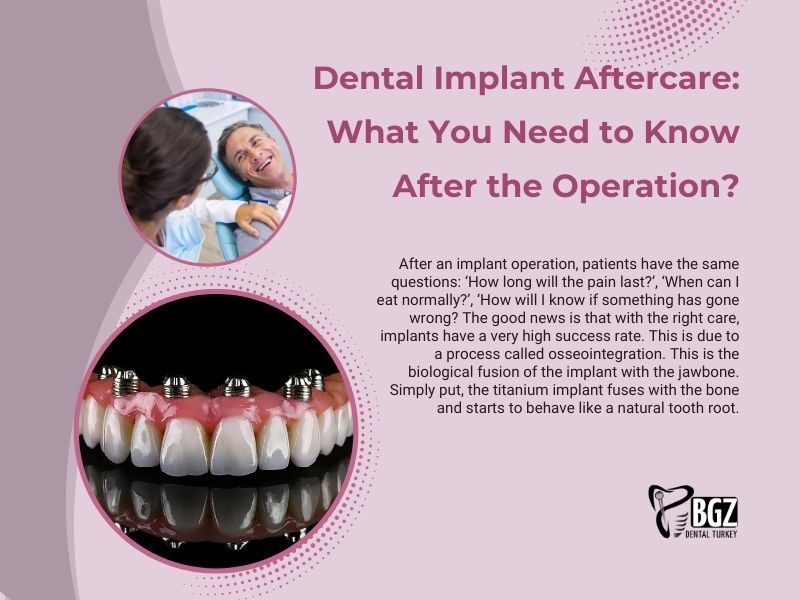
After an implant operation, most patients ask the same things: how long the pain will last, when normal eating can begin, and how to tell whether something is healing as expected.
The reassuring part is this: with the right aftercare, dental implants have a very high success rate. A major reason is osseointegration, which means the implant gradually bonds with the jawbone and begins to function like a natural tooth root.
The first few days are especially important because they create the foundation for long-term healing. Small mistakes during this period can slow recovery, while the right steps can make the process much smoother.
Critical first 24 hours after dental implant surgery
Once the procedure is finished, the gauze placed over the implant area should usually be bitten gently for around 30 to 45 minutes. This helps a blood clot form in the surgical site. That clot protects the wound and supports the early healing phase.
One rule matters more than many patients expect: do not spit during the first day. Frequent spitting or forceful rinsing can disturb the clot and cause bleeding to start again.
Swelling often begins within a few hours. That is usually normal. A cold compress placed on the cheek can help limit swelling during the first day. A practical rhythm is 10 minutes on and 10 minutes off.
Resting with your head slightly elevated also helps. Lying completely flat can increase pressure in the area and may prolong bleeding.
How long does pain last after a dental implant?
Most patients feel mild to moderate discomfort during the first 24 to 48 hours. This is usually controlled well with the pain medication prescribed by the dentist or oral surgeon. In many cases, the pain starts easing noticeably after the third day.
What to eat after a dental implant?
The first few days are easier when you stay with a soft diet. The goal is simple: avoid placing pressure on the surgical area while the tissues begin to settle.
Foods that are often suitable during the first 2 to 3 days include yoghurt, lukewarm soup, mashed vegetables, soft omelette, banana, and avocado. Texture matters, but temperature matters too.
Very hot food and drinks can increase blood flow and may trigger fresh bleeding. For that reason, meals and drinks are safer when they are lukewarm or close to room temperature.
Can you drink coffee after a dental implant?
This is one of the most common patient questions. It is usually best to avoid coffee for the first 24 hours. Caffeine may raise blood pressure slightly, and hot drinks can interfere with the blood clot. In many cases, coffee can be reintroduced after the second day as long as it is not too hot and is consumed in moderation.
Oral hygiene after dental implant surgery
Cleaning the mouth after surgery often makes patients nervous, especially when there are sutures. That concern is understandable. Still, keeping the mouth clean is essential because poor oral hygiene increases the risk of infection.
On the first day, it is usually enough to brush the other teeth normally while avoiding direct contact with the implant site. From the second day onward, a warm salt water rinse can usually be started unless your dentist has given different instructions.
A simple mixture of half a teaspoon of salt in a glass of warm water is often enough. The liquid should be moved gently in the mouth rather than swished forcefully.
When cleaning around a sutured area, a soft-bristled toothbrush is usually the safest option. The surrounding teeth and gumline can be cleaned carefully without pressing directly onto the wound.
How is implant cleaning done in the long term?
Once the implant has healed, long-term maintenance becomes the key to protecting it. A condition called peri-implantitis can develop if plaque and bacteria collect around the implant. This means inflammation and infection of the tissues surrounding the implant, and in advanced cases it can lead to bone loss.
Daily brushing remains essential, but it is often not enough on its own. Interdental brushes and floss designed for implant care help clean the areas that a normal toothbrush cannot reach. This routine can make a major difference in how long an implant stays healthy.
Red flags: When to call the dentist
A small amount of pain, swelling, and tenderness for a few days is usually part of normal healing. What matters is the pattern. In healthy healing, symptoms gradually improve rather than intensify.
You should contact your dentist or surgeon if pain becomes stronger after 3 to 4 days, if swelling continues to grow instead of settle, if fever develops, if there is a persistent bad taste or discharge, or if bleeding cannot be controlled.
The key difference is this: normal post-operative discomfort gets better with time. A complication often becomes more noticeable with time.
How to extend the life of a dental implant
With proper care, a dental implant can often last 20 years or longer. In many patients, it remains functional for decades. Long-term success depends on both the treatment itself and the habits that follow.
Smoking is one of the biggest risk factors. It reduces blood flow, slows tissue repair, and can negatively affect osseointegration, especially during the healing phase.
Another major factor is daily cleaning between the teeth. Implants do not develop decay like natural teeth, but the gums and bone around them can still become inflamed. That is why interdental brushes and floss are not optional extras. They are part of protecting the implant.
Regular check-ups matter as well. Professional monitoring helps detect early signs of gum inflammation, bite imbalance, or plaque accumulation before they turn into larger problems.
Final thoughts on dental implant aftercare
Dental implants are one of the closest solutions to natural teeth, but their success does not depend on the operation alone. The first 24 hours, the first week, and the habits that follow all shape the final result.
Careful eating, gentle cleaning, avoiding smoking, and attending routine follow-ups give the implant the best chance to remain stable, healthy, and comfortable for many years.
With our guaranteed treatments, we are always here for you.
Don’t hesitate to contact us, We will be happy to help anytime.