



BGZ Dental Turkey
What are dental veneers?
Dental veneers are thin laminates made of tooth-colored material that are bonded to the front surface of the tooth to improve its color, shape, or position. These treatments, frequently used in cosmetic dentistry, have the potential to completely transform a smile.
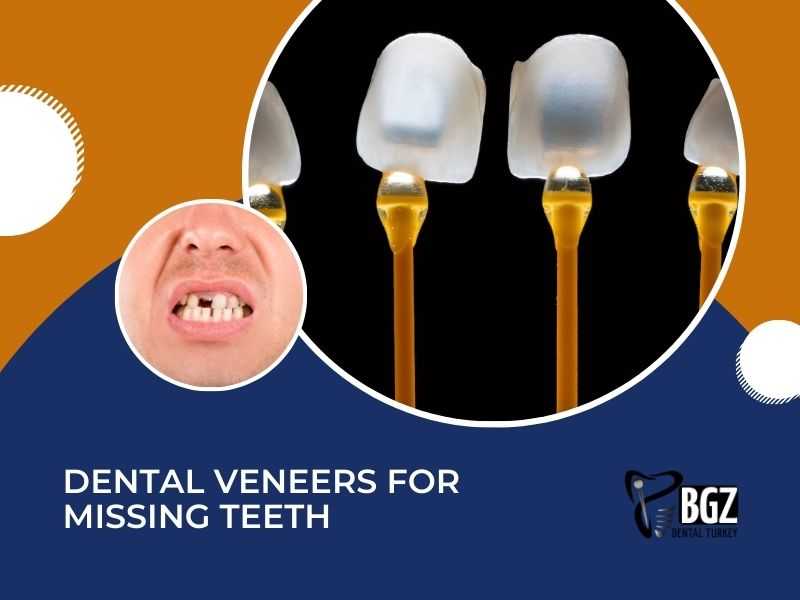
What materials are dental veneers made from?
Veneers are made from the following materials:
Direct veneers (Composite resin veneers)
These are applied directly to the tooth by the dentist in a single session and are generally less expensive.
Indirect veneers (Porcelain or pressed ceramic)
These veneers are prepared in a dental laboratory and offer superior aesthetics, durability, and a longer lifespan. Traditional veneers require the removal of natural enamel structure for a minimum thickness of 0.5-0.7 mm. Indirect no-prep veneers (such as Lumineers) are ultra-thin ceramic laminates with a thickness of 0.3-0.5 mm and require little to no tooth reduction.
What dental problems can veneers correct?
Dental veneers are thin ceramic or composite layers bonded to the front surface of teeth to improve their aesthetic appearance. The main dental and aesthetic issues veneers can correct include:
Discoloration and shade issues
Veneers can effectively improve and change the color and tone of teeth.
Stained or discolored teeth
Veneers are used to permanently correct teeth that do not respond to whitening treatments or have become discolored over time, such as tetracycline staining or fluorosis.
Intrinsic discoloration
Veneers can correct localized defects on the front surface of the tooth or intrinsic discoloration within the enamel.
Aesthetic incompatibility
Veneers may correct unsatisfactory color mismatches in existing ceramic or metal restorations.
General whitening
Teeth can be aesthetically enhanced by matching veneers to existing teeth or selecting a brighter shade.
Shape, size, and damage issues
Broken or cracked teeth
Veneers restore the integrity and aesthetics of teeth affected by fractures or surface cracks.
Shape abnormalities
Veneers can alter tooth shape and improve natural appearance, such as in cases of conoid (peg-shaped) teeth.
Wear and erosion
Teeth with enamel loss due to abrasion or erosion can be restored using veneers.
Asymmetry and size issues
Veneers can correct asymmetrical teeth or teeth that appear too long or too short.
Old restorations
Veneers are also used to cover old or damaged restorations, such as worn composite fillings.
Minor alignment and spacing issues
Spaces between teeth (Diastema)
Veneers are an effective option for closing small unwanted gaps between teeth.
Mild crowding and misalignment
Veneers may be used to correct mildly crowded or slightly misaligned teeth that do not require orthodontic treatment.
Can veneers be used for missing teeth?
- Veneers are not designed to replace a missing tooth.
- They are used to improve the appearance of existing teeth.
- They are suitable for closing small gaps, not large spaces caused by missing teeth.
Can veneers close the space if a tooth is missing?
- Veneers cannot act as a bridge or implant replacement.
- They only cover the front surface of existing teeth.
- In cases of congenitally missing lateral incisors, veneers may reshape adjacent teeth to create aesthetic harmony rather than closing the gap.
- Main treatment options for missing teeth include crowns, fixed bridges, or removable dentures.
Alternative cosmetic dentistry options for missing teeth
Dental implants
Dental implants are the most advanced solution for replacing missing teeth. A titanium implant is placed into the jawbone, acting as a tooth root, with a crown placed on top.
Dental bridges
- Suitable for replacing one or two missing teeth.
- Traditional bridges require preparation of adjacent teeth.
- Adhesive bridges are less invasive and use bonded wings.
Partial dentures
Partial dentures are removable appliances and generally a cost-effective solution for missing teeth.
How do veneers work with implants and bridges?
Veneers, implants, and bridges serve different functions but are often combined within a comprehensive smile design plan to achieve aesthetic harmony.
Veneers and implants
While implants replace missing teeth, veneers enhance the appearance of natural teeth. Planning ensures color and shape harmony between veneers and implant-supported crowns.
Veneers and existing crowns or bridges
No-Prep veneers (Such as lumineers)
No-prep veneers can bond to existing crowns or bridges with minimal surface preparation to enhance bonding strength.
Traditional veneers
Traditional veneers often require crown replacement to maintain consistency and proper aesthetics.
The role of veneers in aesthetic integration
Veneers help harmonize color, shape, and proportions of teeth surrounding implants and bridges to achieve a balanced smile.
Frequently asked questions (FAQ)
Can I Put Veneers on a Partial Denture Tooth?
No. Veneers require bonding to natural enamel and cannot be applied to removable denture teeth.
If I Get an Implant, Will I Still Need Veneers?
Possibly. Veneers may be used to enhance surrounding natural teeth for a complete smile makeover.
Are Composite Veneers a Cheaper Way to Replace a Missing Tooth?
No. Composite veneers do not replace missing teeth but can improve the appearance of existing teeth.
How Many Veneers Do I Need for a Smile Makeover?
The number depends on how many teeth are visible in your smile and the level of correction required.
Do I Need Implants Before Getting Veneers?
If a tooth is missing in the smile line, implant or bridge treatment should be planned before or alongside veneers for optimal results.
With our guaranteed treatments, we are always here for you.
Don’t hesitate to contact us, We will be happy to help anytime.