



BGZ Dental Turkey
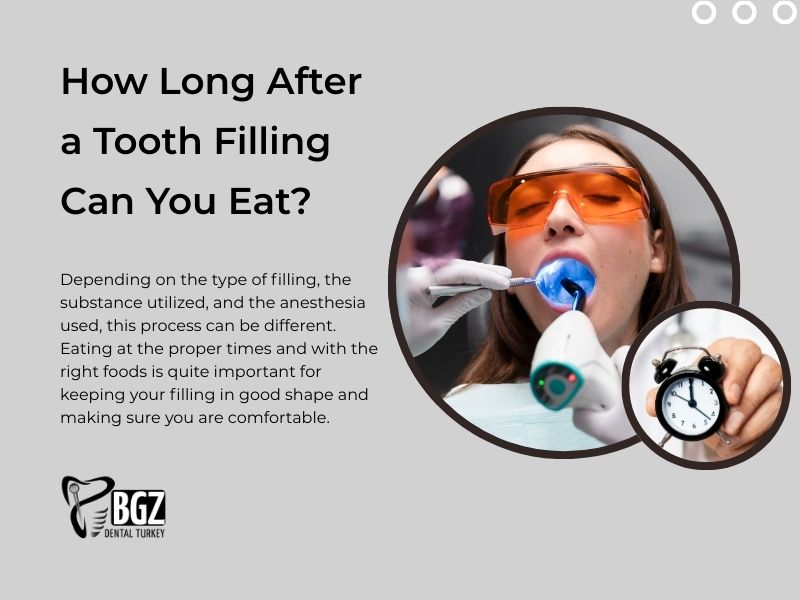
People often inquire, "When can I eat something?" after getting a tooth filling. Depending on the type of filling, the substance utilized, and the anesthesia used, this process can be different. Eating at the proper times and with the right foods is quite important for keeping your filling in good shape and making sure you are comfortable. In this article, we will answer your questions and help you have a healthy recovery by going over the post-filling diet routine step by step.
What is a filling for a tooth?
A dental filling is a way to fix a tooth that has been damaged by disease, wear, or trauma so that it works, stays strong, and looks good again. The goal of this process is to bring the tooth's structure back to its original state and stop it from decaying any more.
When is a dental filling needed?
To restore lost areas of the tooth's exterior, dentists apply fillings.
- Tooth decay-related cavities could be one of the reasons for this loss.
- Fractures and cracks brought on by trauma or accidents.
- Natural aging-related deterioration.
What is the dental filling procedure like?
The dentist takes the following actions during the dental filling procedure:
Anesthesia: To make sure the procedure is painless, local anesthesia is applied to the area.
Cleaning: The tooth's decayed portion is entirely removed, and the surrounding area is thoroughly cleaned and sanitized.
Dental filling: To maintain the tooth's structure and shield its interior, the resulting cavity is filled and shaped with an appropriate filling material.
Types of dental fillings:
The materials used depend on what the patient needs:
Fillings made of amalgam (silver):
These silver fillings are very strong and last a long time (12 to 15 years). They also don't break when you chew on them. They cost less than composite fillings.
Composite (white/resin) fillings:
These are fillings that are meant to look like the natural color of the tooth. People usually like them better because they can match the color of the tooth perfectly.
Benefits of dental fillings
- Extends the life of the tooth: Stops decay and bacteria from getting into the tooth, which means no more invasive treatments like root canals.
- Keeps your mouth healthy: Smooth surfaces make it easier to clean your mouth and stop plaque and tartar from building up.
- Makes you feel better: Lessens tooth sensitivity and pain, which makes it easier to chew and bite.
- Looks good: The smile looks natural, especially with composite fillings.
How long can you wait to eat after getting a filling?
The kind of filling material used and how the anesthetic worked will determine when you can eat after getting a dental filling.
Wait times based on the type of filling
The times it takes for filling materials to set are different.
Waiting period for composite (white) resin fillings:
These fillings are instantly hardened by a special blue light (UV light) applied by the dentist. Theoretically, you can eat immediately after the procedure, but it is recommended to wait 1 to 3 hours for the numbness to subside.
Waiting time for amalgam (silver) fillings:
It takes approximately 24 hours for this material to fully harden and reach maximum strength. During this time, you should avoid chewing on the side where the filling was placed and stay away from hard foods.
Why should you wait until the numbness wears off?
Dentists use local anesthetic to numb the area during a filling procedure. The effects of the anesthetic can usually last between 3 and 6 hours (in some cases up to 8 hours). Eating before the numbness wears off carries the following risks:
- Biting injuries: You may unknowingly bite your tongue, cheek, or lip hard and cause serious injury.
- Risk of burns: When your mouth is numb, you cannot feel the temperature of very hot drinks (such as tea or coffee) and may burn your mouth.
Post-filling nutrition guide
After a dental filling, to protect the tooth and filling, soft, easy-to-chew foods at room temperature should be preferred; sticky, hard, and excessively hot/cold foods should be avoided.
Recommended (safe) foods
In the first few days after the procedure, your teeth may be sensitive to pressure and temperature. To make this process more comfortable, you can choose the following foods:
- Soft Breakfast Foods: Scrambled eggs, oatmeal, soft grains soaked in milk, or porridge.
- Main meals: Mashed potatoes, boiled vegetables, soft pasta, rice, and well-cooked vegetable dishes.
- Snacks: Yogurt, smoothies prepared at room temperature, soft cheeses, and cottage cheese.
- Liquids: Lukewarm (not hot) soups and water at room temperature.
Foods to avoid
To prevent the new filling from shifting, cracking, or increasing sensitivity, the following foods should be avoided:
|
Category |
Foods to Avoid |
Reason |
|
Sticky Foods |
Chewing gum, caramels, toffees, peanut butter, and other sticky treats. |
These can pull at or dislodge a fresh filling, especially if it has not yet fully set. |
|
Hard Foods |
Nuts, raw carrots, crusty bread, ice, hard sweets, and apples. |
These put excessive pressure on the teeth and could crack or dislodge the new filling. |
|
Hot and Cold Foods |
Very hot coffee or tea, ice cream, and soup straight from the stove. |
These can trigger post-treatment sensitivity and may cause accidental burns while the mouth is still numb. |
|
Sugary or Acidic Foods |
Fizzy drinks, fruit juices, citrus fruits, and sugary cakes. |
These can irritate the filled tooth and encourage bacterial growth around the treated area. |
Tips and care to consider after a dental filling
- Chew on the other side: For the first 24 hours and until any sensitivity goes away, be sure to chew on the side without the filling, especially if you have amalgam fillings.
- Don't use a straw: For the first few hours after the procedure, don't use a straw. The suction can slow down the healing process.
- Taking care of your teeth: Keep brushing and flossing your teeth. But on the first day, gently use dental floss in the area where the filling was put in, and slide the floss sideways instead of pulling it up quickly.
- Cigarettes and alcohol: Stay away from alcohol and tobacco for the first 24 hours because they could slow down the healing process and hurt the filling.
When should you call your dentist?
If you have any of the following, you should see your dentist:
- Pain that doesn't go away after a few days or gets worse.
- A sharp pain when you bite down.
- Height sensation: If your tooth feels higher than the others when you close your teeth, this could cause the filling to break.
- The filling has moved or broken.
With our guaranteed treatments, we are always here for you.
Don’t hesitate to contact us, We will be happy to help anytime.