



BGZ Dental Turkey
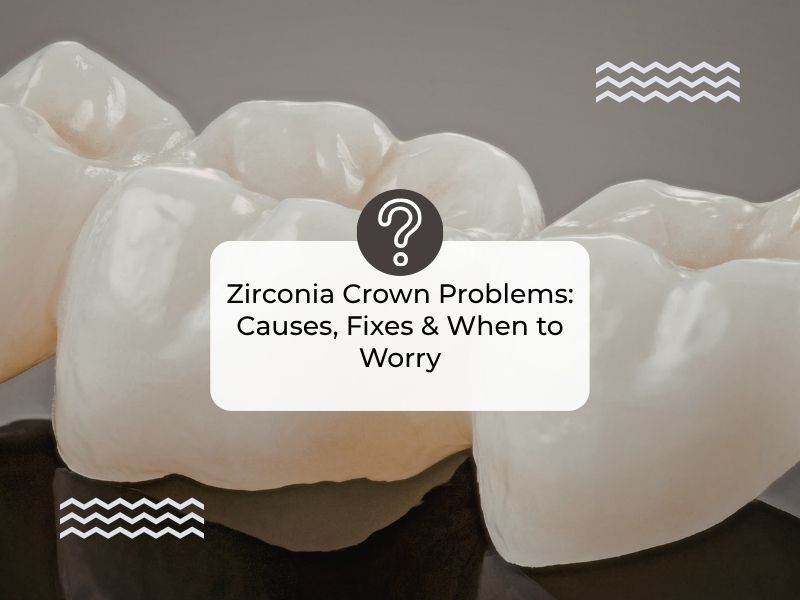
A zirconia crown is a fixed dental restoration made from zirconia ceramic, which is fitted over a decayed or damaged tooth. It is preferred for both front and back teeth due to its appearance, which closely matches the colour of natural teeth, and its high durability. When fitted correctly, they can be used trouble-free for 10–15 years, and in some cases for a lifetime.
However, the phrase ‘when fitted correctly’ is important. In this article, I explain what kinds of problems actually arise with zirconia crowns, what the underlying causes are, and when you, as a patient, should be concerned.
The Most Common Problems and Their Root Causes
1. Gum Recession and a Grey/Dark Appearance
The gum recedes at the edge of the crown, exposing the underlying metal framework or the edge of the crown.
Root cause: This is usually seen with metal-supported porcelain (PFM) crowns; it is rare with all-zirconia crowns. If this complaint arises with an all-zirconia crown, the cause is most likely an incorrect measurement of the gum line, the crown’s gingival margin (gum line) being fitted incorrectly, or natural gum recession over time. It is not a material issue, but rather a problem with measurement and planning.
2. Sensitivity to Hot and Cold
Sudden sensitivity to hot or cold foods, either immediately after the crown is fitted or months later.
Root cause: Excessive thinning of the tooth during preparation, pressure being applied to the occlusal surface before the cement beneath the crown has fully set, or a micro-leakage beneath the gum line. This occurs more frequently in vital teeth that have not undergone root canal treatment and usually subsides spontaneously within a few weeks. If it does not subside, the tooth may have been prepared too close to the root canal.
3. Crown Detachment or Loosening
The crown comes out completely or can be wiggled with a finger.
Root cause: The most common cause is insufficient retention — that is, the tooth preparation not having been carried out at the correct angle and height to ensure the crown holds securely. The second cause is the use of low-quality or incorrect types of cement. The third is excessive forces, such as bruxism (teeth clenching or grinding), which continuously exert micro-level pressure on the crown throughout the night.
4. Fracture or Cracking
A small piece breaking off (chipping) or a complete fracture of the crown.
Root cause: In layered zirconia crowns, the outer porcelain layer is more brittle than the underlying zirconia core, and this layer may crack. Fractures are much rarer in all-zirconia (monolithic) crowns, but trauma, biting into hard food or night-time teeth grinding can cause them. A manufacturing fault during the firing process is also a possible, albeit unlikely, cause.
5. Bad Odour or Taste
An unpleasant odour emanating from the edge of the crown, or a persistent bad taste in the mouth.
Root cause: Almost always, this is due to bacteria and food debris accumulating as a result of micro-leakage at the crown margin. If the crown margin does not fit snugly against the tooth surface, plaque accumulates in that gap and decay sets in. This is not a hygiene issue, but a marginal fit issue — no matter how well you brush at home, your toothbrush cannot reach that gap.
Solutions and Treatment Options
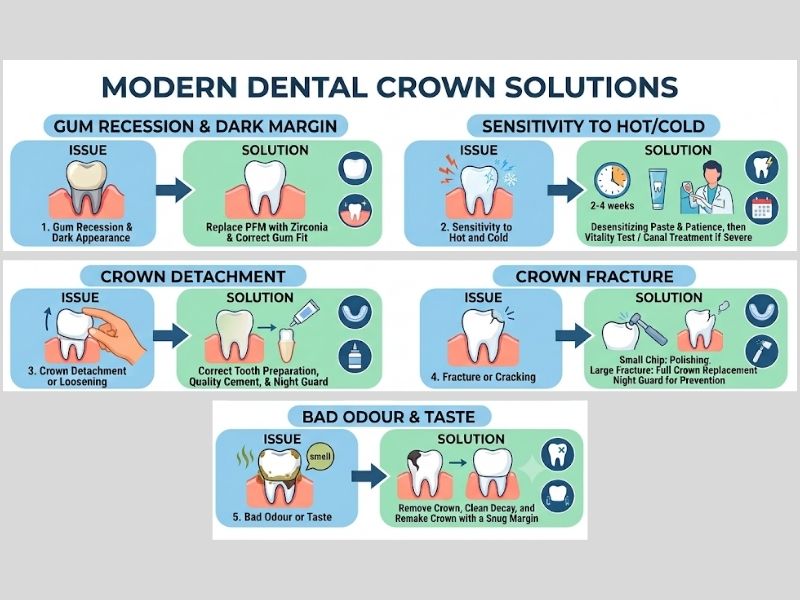
For sensitivity: It is usually advisable to wait for the first 2–4 weeks, and a desensitising toothpaste is recommended. If the sensitivity is persistent and severe, the vitality of the tooth is checked (vitality test); if the pulp is affected, root canal treatment may be required.
For loosening or dislodgement: The crown cannot be re-cemented using the same cement — the tooth surface and the interior of the crown are cleaned, and it is re-cemented with new cement. If retention is insufficient (the tooth preparation is too short), the tooth may need to be re-prepared or a different type of crown may be required.
In the event of a fracture: Small chips can be corrected by polishing; it may not be necessary to replace the crown. In the case of large fractures, the crown is completely replaced. If bruxism is diagnosed, a night guard must be prescribed; otherwise, the new crown will suffer the same fate.
For gum recession/colour issues: If there is a problem in the aesthetic zone, the crown is replaced and the margin is concealed with zirconia. If the gum line has changed, a reconstruction plan is drawn up following a periodontal assessment.
For odour/leakage: The crown is removed and the underlying tooth is checked for decay. If decay is present, it is cleaned out and the crown is remade — simply re-bonding the old crown is not a solution, as the same leakage will recur.
In short: Zirconia is preferred for cases involving the back teeth where strength is required; E-max is chosen when maximum aesthetics are desired for the front teeth; and PFM is the preferred option when budget is the priority. Zirconia’s balance of aesthetics and durability makes it the most popular choice today.
Frequently Asked Questions
When Should You See a Dentist?
Book an appointment without delay in the following situations:
- The crown has fallen out completely or can be moved with a finger
- You have throbbing pain that does not subside on its own
- You feel sharp, recurring pain when biting down
- There is a visible crack or a sharp fragment at the edge of the crown
- Your gums are severely red, swollen or bleeding
- There is swelling in the face or a fever (this may indicate an infection)
Mild, diminishing sensitivity or minor aesthetic concerns are not urgent but must be mentioned during a routine check-up.
How long does a zirconia crown last?
On average 10–15 years; with good care and the use of a night guard, it can last over 20 years. Lifespan depends on oral hygiene, chewing habits and the quality of the initial fitting.
Can the tooth underneath the crown decay?
Yes, the crown does not protect the tooth from decay — it merely covers it. If there is a leak at the edge of the crown, decay can progress silently underneath, which is why regular X-ray checks are important.
Does a zirconia crown smell, or does the adhesive give off an odour?
A crown that has been correctly cemented and has a good marginal fit will not smell. If there is an odour, it almost always indicates a micro-leak or inadequate cleaning; this is not a normal occurrence.
Is a zirconia crown visible on an X-ray, and does it interfere with an MRI scan?
It is clearly visible on an X-ray and does not interfere with an MRI scan. Modern zirconium crowns are MRI-compatible and non-magnetic.
Related: Are veneers a better option?
With our guaranteed treatments, we are always here for you.
Don’t hesitate to contact us, We will be happy to help anytime.